Tim Berners-Lee (from class 1) wrote his WorldWideWeb program on a brand-new (well, in 1990 anyway) high-end workstation from NeXT Computer. Here’s a picture:
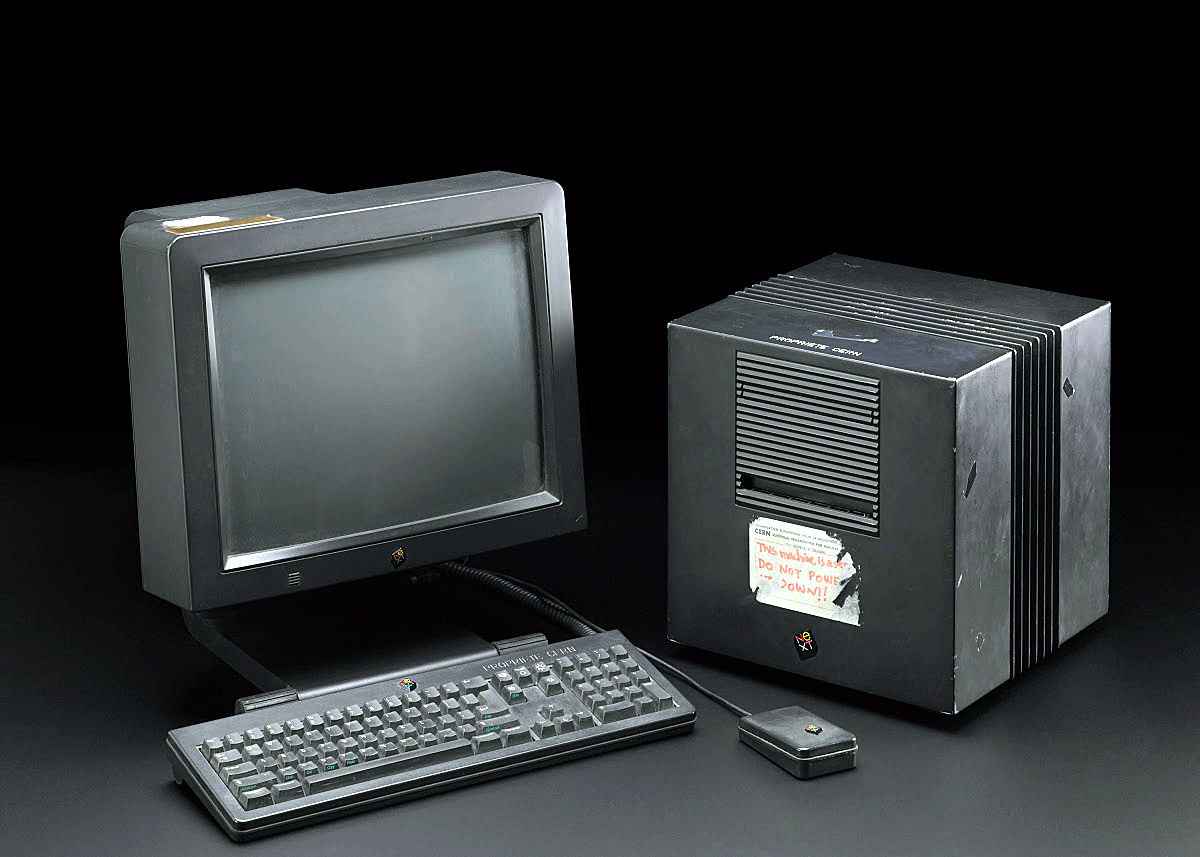
NeXT Computer, Inc. was founded five years earlier by Steve Jobs after being fired from his first company, Apple Computer by its board of directors. Jobs had a new idea that personal computers would go only so far, and he was interested in entering other markets with more powerful hardware. He wanted to make workstation computers, then priced out of reach of all but the largest organizations at $20–50,000. The NeXT machine cost only $6,500 for a base model and was marketed to universities, which would make the powerful computers and software applications accessible to students and faculty.
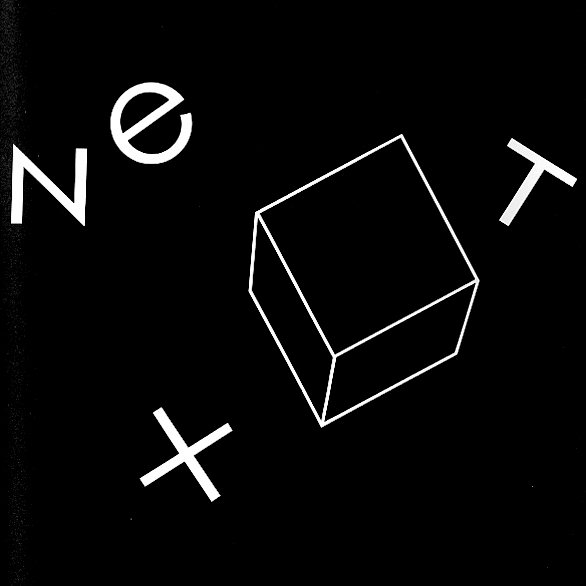
Jobs brought a team with him from Apple, including graphic designer Susan Kare. As before, Kare was responsible for all of the interface graphics in the new computer’s operating system software. Kare then suggested Paul Rand to work on a logo for the new company. Jobs had long admired Rand’s work and he invited him to work on the project. Rand agreed enthusiastically — he liked Jobs and the new machines were modern, black, austere; one was simply a cube. This is the logo he designed:

By 1985 Paul Rand was living and working outside of New Haven, Connecticut. He was teaching at Yale University School of Art and was in great demand as a designer of corporate logos; these projects have large budgets and high stakes, and Rand knew it. When handling proposed new commissions, Rand would invite the potential commissioner to meet at the International House of Pancakes near his studio, have breakfast, and discuss their problem on neutral ground. Rand would then decide whether or not to accept the job. His baseline fee was $100,000.
When proposing a new logo, Rand typically produced a small printed booklet which collected his design research, exploration, and finally, a single recommendation. These were really proto-slide decks, and provide a clear look into the graphic design research and process, as well as a hopefully irrefutable argument to his clients for the proposed logo. The booklet provides a peek behind the curtain.
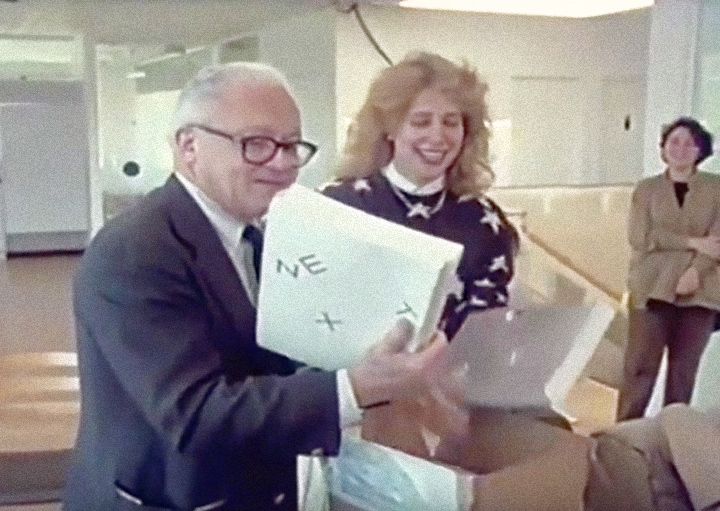
Rand’s visit to NeXT Computer to present his logo proposal was, miraculously, captured on video. In the part I’d like to share the full staff is assembled to see what Rand’s come up with. Here Rand is assisted by Kare as he pulls the booklets out of a box.
NeXT Computer, Inc. was founded five years earlier by Steve Jobs after being fired from his first company, Apple Computer by its board of directors. Jobs had a new idea that personal computers would go only so far, and he was interested in entering other markets with more powerful hardware. He wanted to make workstation computers, then priced out of reach of all but the largest organizations at $20–50,000. The NeXT machine cost only $6,500 for a base model and was marketed to universities, which would make the powerful computers and software applications accessible to students and faculty.
Jobs brought a team with him from Apple, including graphic designer Susan Kare. As before, Kare was responsible for all of the interface graphics in the new computer’s operating system software. Kare then suggested Paul Rand to work on a logo for the new company. Jobs had long admired Rand’s work and he invited him to work on the project. Rand agreed enthusiastically — he liked Jobs and the new machines were modern, black, austere; one was simply a cube. This is the logo he designed:
By 1985 Paul Rand was living and working outside of New Haven, Connecticut. He was teaching at Yale University School of Art and was in great demand as a designer of corporate logos; these projects have large budgets and high stakes, and Rand knew it. When handling proposed new commissions, Rand would invite the potential commissioner to meet at the International House of Pancakes near his studio, have breakfast, and discuss their problem on neutral ground. Rand would then decide whether or not to accept the job. His baseline fee was $100,000.
When proposing a new logo, Rand typically produced a small printed booklet which collected his design research, exploration, and finally, a single recommendation. These were really proto-slide decks, and provide a clear look into the graphic design research and process, as well as a hopefully irrefutable argument to his clients for the proposed logo. The booklet provides a peek behind the curtain.
Rand’s visit to NeXT Computer to present his logo proposal was, miraculously, captured on video. In the part I’d like to share the full staff is assembled to see what Rand’s come up with. Here Rand is assisted by Kare as he pulls the booklets out of a box.
Narrator: This morning at its offices in Silicon Valley, California, the company is about to get a first look at its new trademark, the signature it hopes to make familiar around the world. The designer Paul Rand created the logos for IBM, Westinghouse, UPS, and many others. Rand doesn’t normally work for infant companies even if they could afford him. But NeXT isn’t an ordinary startup.
Paul Rand: The idea—please don’t open, don’t look at the back first. This is the front. And don’t get scared, this is not the design. I did this to sort of floor Steve when he saw it, you know and say, “Good Jesus, a hundred thousand bucks down the drain.” ...Continues in class ...
February 9, 2026
The NeXT computer
Reading
The NeXT logo (Paul Rand)
Intuition and Ideas (Paul Rand)
Resources
W3 Schools HTML Tutorial
The NeXT Computer introduction
International NeXT Forum
Paul Rand Introducing the NeXT identity
NeXT on Are.na
Steve Jobs on the World Wide Web
Assignment
#1 <a> starts
The NeXT computer
Reading
The NeXT logo (Paul Rand)
Intuition and Ideas (Paul Rand)
Resources
W3 Schools HTML Tutorial
The NeXT Computer introduction
International NeXT Forum
Paul Rand Introducing the NeXT identity
NeXT on Are.na
Steve Jobs on the World Wide Web
Assignment
#1 <a> starts