There’s a channel on Are.na called ** How do you describe Are.na at a party? Wonderfully self-reflexive, it’s also quite earnest. A few descriptions I particularly like include “an internet for introverts,” “playlists for ideas,” and “hyperlink society at its best.” One user declares it is “how i’d want to browse the internet forever,” and another offers a concrete description of its logo “two six point asterisks side by side, with two points of each asterisk touching in the middle”:

The logo itself (designed by Harsh Patel) does a remarkably concise job of describing how the platform works. In a linear text, the asterisk is used to mark a link to further information, pointing off in another direction from the thrust of the argument. (The graphic form of the asterisk even suggests its function.) Are.na is premised on these sideways connections. Users post “blocks” which are aggregated into “channels.” Any block can be connected to any number of channels. Channels can even include other channels. It’s an organic network built by its users.
Another way to describe Are.na which seems especially apt is “like del.icio.us, but better.” Ten years into Are.na’s existence as a slow, considered social network of sorts, co-founder Charles Broskowski wrote a blog post titled On Motivation about why to keep going. In it he points to precedents for Are.na including early social bookmarking website del.icio.us.
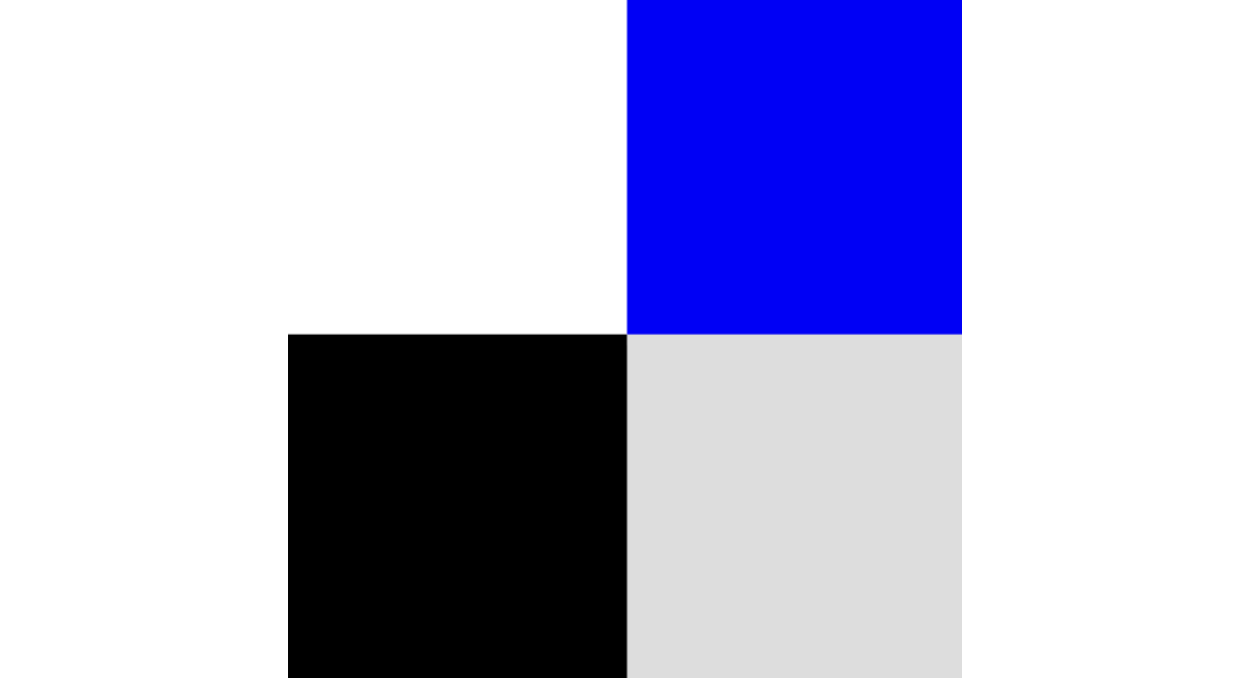
Founded in 2003, Del.icio.us was an early Web 2.0 site and fostered organic communities of interest as users shared their internet bookmarks. It ran on the assumption that if you appreciated (or shared) another user’s bookmarked website, you might also like that user’s other bookmarks. (Bookmarks seem largely antiquated on today’s internet.) You’ll notice that this logo (which seems to have been designed by the site’s co-founder) is built up of discrete blocks to form the whole. Again, it is a pretty concise description of how del.icio.us works.
The Are.na blog post is, naturally enough, illustrated with Are.na blocks including this stunner by Bryce Wilner, called Plotter’s Tour (Spiral) (2017).
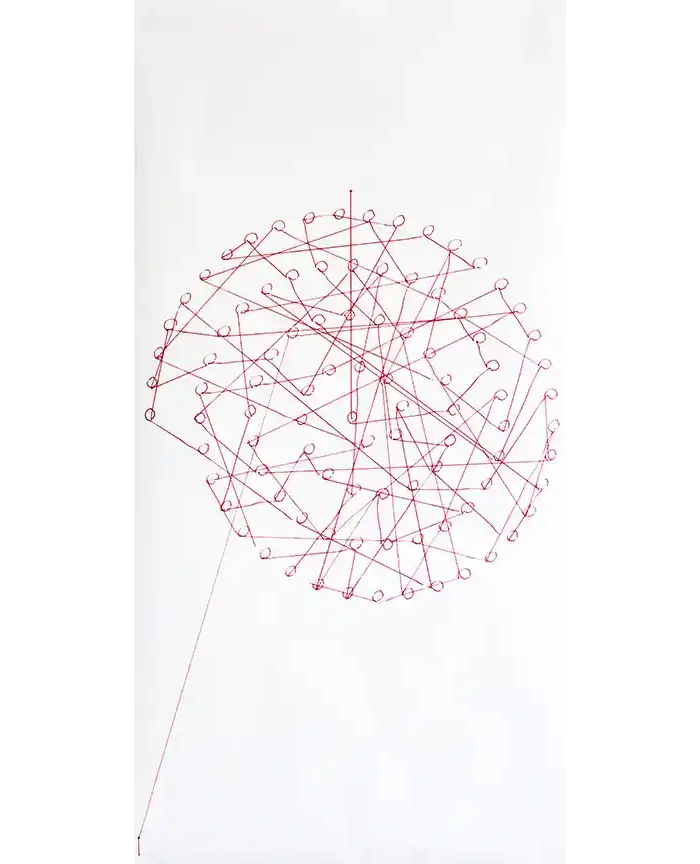
To my eyes, this is a perfectly convincing picture of the process of building up a whole by an incremental aggregation of connections. You will notice the lines look hand-drawn, but instead these are drawn by a computer-controlled pen plotter. You will also notice that the dots that form the spiral are connected, but not in a route following the curve. You will then notice the lines hop from dot to dot, connecting the parts in an ordered sequence which, only over time, reveals the big picture — in this case, a spiral. This is one in a sequence of works that Bryce describes in an interview with the Creative Independent.
Bryce’s Plotter’s Tour (Spiral) might work as an equally descriptive Are.na logo. Here, as on the platform, a dense and coherent network forms *only* through the process of making connections. Crucially, this picture only emerges over time, the result of a virtuous cycle captured in another Are.na block:

*Also* visiting today is Sean Yendrys from Tallinn, Estonia where he directs the MA Curriculum in Graphic Design at the Estonian Academy of Arts. Sean is an independent designer and makes exceptional and influential work. I don't think he is on are.na, but his work definitely is.
Continues in class . . .
The logo itself (designed by Harsh Patel) does a remarkably concise job of describing how the platform works. In a linear text, the asterisk is used to mark a link to further information, pointing off in another direction from the thrust of the argument. (The graphic form of the asterisk even suggests its function.) Are.na is premised on these sideways connections. Users post “blocks” which are aggregated into “channels.” Any block can be connected to any number of channels. Channels can even include other channels. It’s an organic network built by its users.
Another way to describe Are.na which seems especially apt is “like del.icio.us, but better.” Ten years into Are.na’s existence as a slow, considered social network of sorts, co-founder Charles Broskowski wrote a blog post titled On Motivation about why to keep going. In it he points to precedents for Are.na including early social bookmarking website del.icio.us.
Founded in 2003, Del.icio.us was an early Web 2.0 site and fostered organic communities of interest as users shared their internet bookmarks. It ran on the assumption that if you appreciated (or shared) another user’s bookmarked website, you might also like that user’s other bookmarks. (Bookmarks seem largely antiquated on today’s internet.) You’ll notice that this logo (which seems to have been designed by the site’s co-founder) is built up of discrete blocks to form the whole. Again, it is a pretty concise description of how del.icio.us works.
The Are.na blog post is, naturally enough, illustrated with Are.na blocks including this stunner by Bryce Wilner, called Plotter’s Tour (Spiral) (2017).
To my eyes, this is a perfectly convincing picture of the process of building up a whole by an incremental aggregation of connections. You will notice the lines look hand-drawn, but instead these are drawn by a computer-controlled pen plotter. You will also notice that the dots that form the spiral are connected, but not in a route following the curve. You will then notice the lines hop from dot to dot, connecting the parts in an ordered sequence which, only over time, reveals the big picture — in this case, a spiral. This is one in a sequence of works that Bryce describes in an interview with the Creative Independent.
Bryce’s Plotter’s Tour (Spiral) might work as an equally descriptive Are.na logo. Here, as on the platform, a dense and coherent network forms *only* through the process of making connections. Crucially, this picture only emerges over time, the result of a virtuous cycle captured in another Are.na block:
*Also* visiting today is Sean Yendrys from Tallinn, Estonia where he directs the MA Curriculum in Graphic Design at the Estonian Academy of Arts. Sean is an independent designer and makes exceptional and influential work. I don't think he is on are.na, but his work definitely is.
Continues in class . . .
April 13, 2026
Like del.icio.us, but better
Reading
On Motivation
Resources
** How do you describe Are.na at a party?
The Last Days of Social Media
Web 2.0
Visitors
Charles Broskowski
Sean Yendrys
Assignment
#3 w-w-w (continues)
Like del.icio.us, but better
Reading
On Motivation
Resources
** How do you describe Are.na at a party?
The Last Days of Social Media
Web 2.0
Visitors
Charles Broskowski
Sean Yendrys
Assignment
#3 w-w-w (continues)